

April 27, 2026
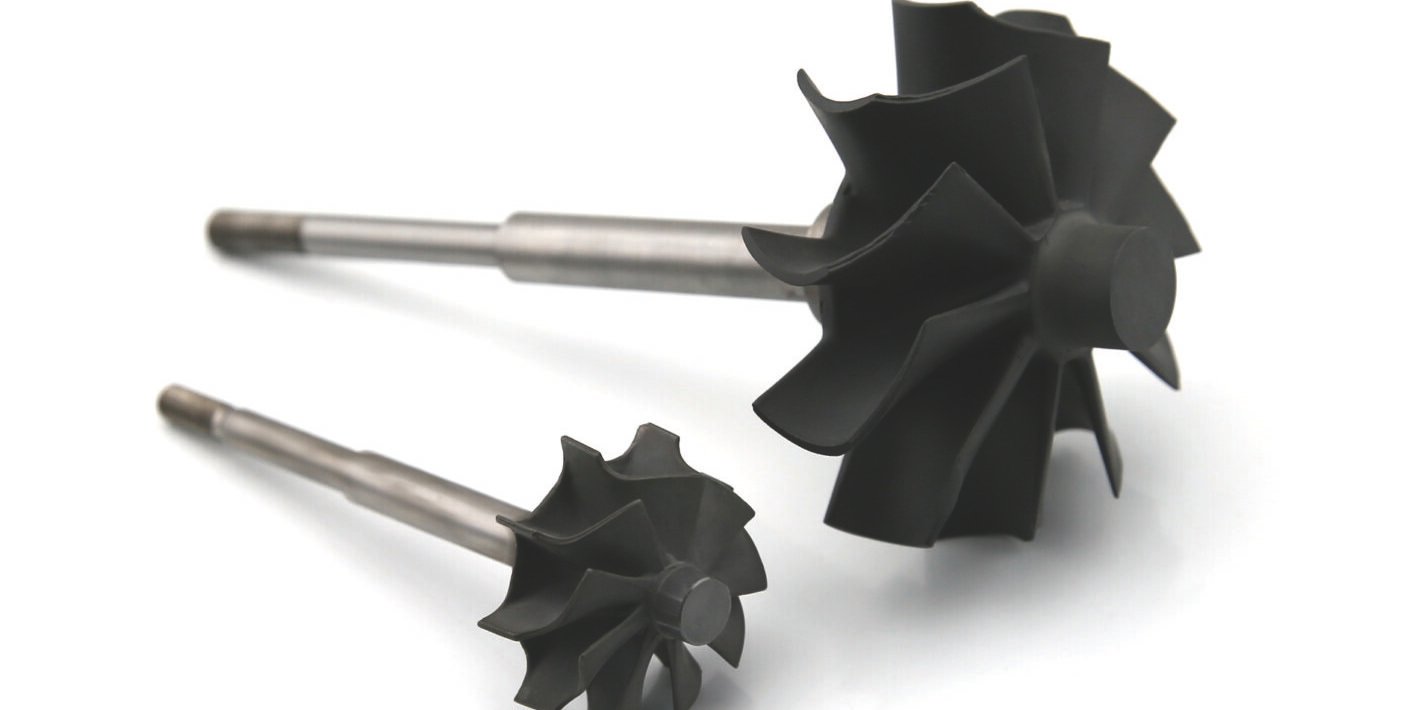
In the evolving landscape of aerospace and automotive engineering, the quest for lightweight, heat-resistant, and high-efficiency components is never-ending. Among these innovations, the Silicon Nitride (Si3N4) Turbocharger Turbine Shaft Assembly stands out as a game-changer.
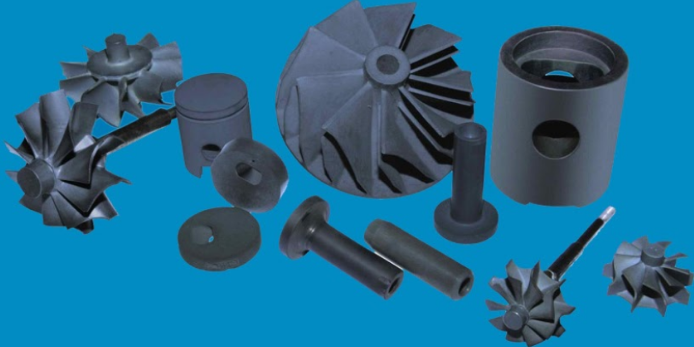
For businesses seeking a reliable ODM/OEM manufacturer, understanding the technical synergy between material science and precision engineering is crucial.
Why Silicon Nitride (Si3N4) is the Future of Turbocharging
Traditional nickel-based superalloys have long been the standard for turbine wheels. However, as engines push for higher boost pressures and faster response times, the physical limitations of metal become apparent.
- Ultra-Low Inertia: Silicon nitride is roughly 60% lighter than steel or inconel. This drastically reduces the polar moment of inertia, allowing the turbine to spool up almost instantaneously, effectively eliminating “turbo lag.”
- Superior Thermal Stability: Operating at temperatures exceeding 1000°C, $Si_3N_4$ maintains its structural integrity and fatigue resistance far better than most metals.
- Corrosion and Wear Resistance: Ceramic components are chemically inert, ensuring longevity in the harsh, corrosive environment of exhaust gas streams.
Thermokera: Your Premier ODM/OEM Manufacturing Partner
When it comes to the specialized production of ceramic-to-metal joined assemblies, Thermokera is at the forefront of global manufacturing. We provide comprehensive ODM (Original Design Manufacturer) and OEM (Original Equipment Manufacturer) services tailored to the aerospace and high-performance automotive sectors.
The Thermokera Advantage:
- Precision Ceramic-to-Metal Bonding: One of the greatest challenges in manufacturing a turbine shaft assembly is joining the ceramic wheel to the steel shaft. Thermokera utilizes proprietary active brazing and shrink-fit technologies to ensure a bond that handles extreme centrifugal forces and thermal cycling.
- Advanced GPS and HIP Sintering: Our factory employs Gas Pressure Sintering (GPS) and Hot Isostatic Pressing (HIP) to ensure 100% density in our silicon nitride components, eliminating microscopic pores that could lead to structural failure.
- Bespoke Engineering (ODM): Don’t just settle for off-the-shelf specs. Thermokera’s engineering team works with your CAD designs to optimize blade geometry for specific airflow dynamics and pressure ratios.
- Rigorous Quality Control: Every assembly undergoes high-speed dynamic balancing and X-ray non-destructive testing (NDT) to meet international aerospace standards.
The Manufacturing Process: From Powder to Performance
At the Thermokera factory, we control the entire lifecycle of the Silicon Nitride Turbocharger Turbine Shaft Assembly:
- Powder Preparation: Sourcing high-purity $\alpha$-phase $Si_3N_4$ powder.
- Injection Molding/CIP: Shaping the complex aerodynamic curves of the turbine blades.
- Precision Machining: Diamond-grinding the shaft and wheel to micron-level tolerances.
- Balancing: Ensuring vibration-free operation at speeds often exceeding 200,000 RPM.
Partner with Thermokera Today
Whether you are developing a next-generation UAV engine or a high-efficiency commercial vehicle turbocharger, the quality of your turbine shaft assembly determines your product’s success.
As a specialized Silicon Nitride Turbocharger Turbine Shaft Assembly manufacturer, Thermokera combines material expertise with world-class production capacity. Elevate your engine performance with ceramic technology that is built to last.
Contact Thermokera’s engineering team for a technical consultation and RFQ on your next OEM project.
FAQ: Silicon Nitride Ceramic Turbocharger Components
Q1: Why should we choose Silicon Nitride over traditional Inconel for turbine wheels?
A: The primary advantage is mass reduction. Silicon Nitride ($Si_3N_4$) has approximately 40% the density of steel or superalloys. This significantly lowers the moment of inertia, leading to a 30-50% improvement in boost response time (reducing turbo lag). Additionally, it operates efficiently at higher temperatures without the “creep” or deformation issues common in metals.
Q2: How does Thermokera ensure the strength of the ceramic-to-metal joint?
A: The interface between the ceramic wheel and the steel shaft is the most critical point. Thermokera utilizes advanced active metal brazing and precision shrink-fitting technologies. This creates a high-strength bond capable of withstanding extreme centrifugal forces (up to 250,000+ RPM) and rapid thermal cycling without separation or cracking.
Q3: What are the maximum operating temperatures for Thermokera’s ceramic assemblies?
A: Our Silicon Nitride components are engineered to maintain high structural strength at constant temperatures up to 1000°C (1832°F), with short-term peaks even higher. This makes them ideal for modern high-efficiency lean-burn engines and aerospace gas turbines.
Q4: Does Thermokera support custom aerodynamic designs (ODM)?
A: Yes. As a specialized ODM/OEM manufacturer, we don’t just produce standard parts. Our engineering team can work from your CAD files to optimize blade geometry, thickness, and count to meet specific pressure ratio and mass flow requirements. We provide full prototyping services before mass production.
Q5: How do you guarantee the balance and reliability of the assembly?
A: Every assembly undergoes G0.4 grade precision dynamic balancing. We also employ Non-Destructive Testing (NDT), including ultrasonic and X-ray inspection, to ensure there are no internal micro-defects or porosities in the ceramic structure. This ensures a service life that matches or exceeds traditional metallic turbochargers.
Q6: What is the typical lead time for an OEM project at your factory?
A: For standard specifications, we maintain a steady production cycle. For custom OEM/ODM projects, the typical timeline involves:
- Design Validation & Tooling: 4–6 weeks.
- Prototyping & Testing: 3–4 weeks.
- Mass Production: Depending on volume, usually 6–8 weeks from final approval.

About Author Thermokera Ceramics
Thermokera Electric Heating Ceramics Manufacturing Plant Sales Engineer, with 10 years of specialized experience in ceramic heating rods, alumina, and silicon nitride ceramic ignition products. Proficient in both Chinese and English, with expertise in international trade processes. Providing OEM solutions and professional consulting services for electric heating ceramic products.
April 8, 2026
Related Posts

April 13, 2026
